AI-Enabled Marketing & Sales Operations Case Study | Internal Deployment
A production suite of AI-enabled tools, governance standards, adoption practices, and measurement systems designed for real marketing and sales workflows.
Project Snapshot
- Organization: Established mid-market technology company
- Environment: International B2B operations
- Initial Deployment: 2023
- Primary Functions: Marketing and sales
- Tools Built: 10 production tools and assistants
- Program Duration: Multi-year development and maintenance
- Approach: Workflow integration, governance, adoption, measurement, and continuous improvement
Frameworks Used
- The 7 Failure Points Audit
- The 5 Governance Decisions
- The 3 Pre-Deployment Questions
- Role-Based Adoption Training
- Quarterly Maintenance Protocol
Key Results
- 30% productivity improvement
- 40% reduction in manual production time
- 33% reduction in attribution errors
- Zero recorded governance incidents
- Multi-year production use
- Consistent operating practices across distributed teams
Technology Environment
The program used a combination of leading generative AI platforms, application programming interfaces (APIs), workflow automation, analytics, content management, and internal business systems.
The underlying technology changed as AI capabilities evolved. Tools and workflows were updated accordingly rather than remaining tied to a single model or platform.
The Opportunity
In 2023, an established international technology company was exploring practical ways to apply rapidly developing generative AI capabilities to marketing and sales operations.
The organization already had mature marketing and business development functions, established technology platforms, and teams supporting a substantial volume of work. Generative AI created an opportunity to make selected workflows faster and more scalable while maintaining the standards required in a B2B technology environment.
The objective was practical: identify where AI could create measurable value, integrate it into existing workflows, establish appropriate safeguards, and determine whether the resulting systems actually improved performance. Rather than introducing AI as a separate technology initiative, I approached it as an operational capability within marketing and sales.
The Strategic Objective
The work focused on identifying marketing and sales processes where AI could improve efficiency without sacrificing quality, accuracy, brand consistency, or appropriate human oversight.
That required more than selecting AI tools. Each use case had to account for the information required by the workflow, the appropriate role for human judgment, potential data sensitivity, output quality, integration with existing systems, and how success would be measured.
The resulting program combined experimentation with operational discipline. New capabilities could be tested quickly while production workflows followed defined standards for review, access, and maintenance.
What Was Built
AI Tool Suite — 10 Production Tools and Assistants
A portfolio of AI-enabled tools was developed around recurring marketing and sales needs. The tools used structured organizational context, defined workflows, brand standards, and business rules to produce more useful outputs than generic prompting alone. Where practical, capabilities were integrated into existing business systems so employees could access them within familiar workflows.
Production use cases included:
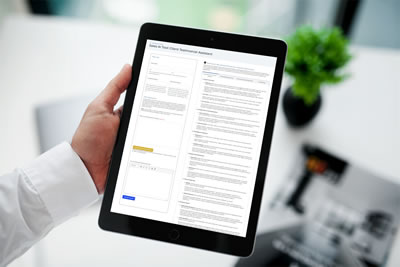
- Candidate Resume Assistant — streamlined the preparation and standardization of candidate materials used in business development and recruiting workflows.
- Testimonial Assistant — supported structured testimonial development for approved employee and client use cases.
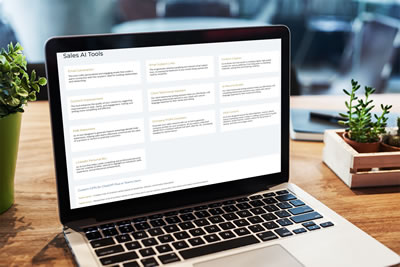
- Sales AI Tools Suite — supported prospect research, outreach development, proposal preparation, and competitive positioning.
- Company Research Assistant — standardized account and prospect research around defined Ideal Customer Profile criteria.
- Content Improvement Assistant — reviewed marketing materials against established editorial and brand standards.
- Professional Profile Assistant — helped employees prepare consistent professional biography and profile content.
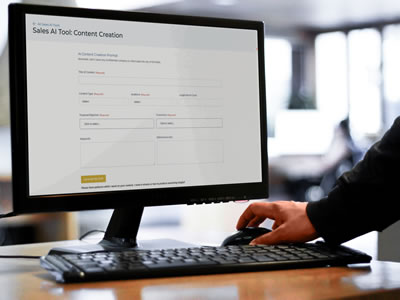
- Content Creation Assistant — supported campaign, editorial, and sales-enablement content using structured brand and review requirements.
- Specialized AI Assistants — supported defined research, naming, analysis, and operational tasks requiring deeper context or structured instructions.
The toolset evolved over time as commercially available AI models became more capable. Some workflows were improved incrementally. Others were redesigned when new model capabilities made the original approach unnecessary or inefficient.
Governance Standards
Governance was incorporated into the design of the marketing and sales workflows from the beginning.
The operating standards addressed five recurring decisions:
- Data handling. Different information types required different rules for appropriate AI use.
- Consent. Workflows involving employee, candidate, client, or third-party information required appropriate consent and review.
- Human oversight. Each use case established where human judgment, editing, or approval remained necessary.
- Access. AI capabilities were made available according to the needs and responsibilities of the people using them.
- Output review. Review requirements reflected the purpose, audience, and potential consequence of the output.
The objective was responsible adoption that employees could actually apply during everyday work.
Adoption and Enablement
Successful deployment depended on helping people understand how to work with AI rather than simply giving them access to another application.
Training focused on practical use within marketing and sales roles. Team members learned how to identify appropriate AI-assisted tasks, provide useful context, evaluate output quality, recognize situations requiring human judgment, and respond when results were incomplete or unreliable.
This approach also made the program more resilient to technology changes. Specific interfaces and models could change without requiring the team to relearn the fundamentals of responsible AI-assisted work.
Measurement and Continuous Improvement
AI workflows were evaluated against the processes they were intended to improve.
Where reliable baselines existed, performance measurement examined outcomes such as time required per task, manual production effort, error rates, editing requirements, and workflow reliability.
New tools received greater human review during early production use.
The program also incorporated periodic maintenance. Prompts and instructions were reassessed, model changes were evaluated, and tools were redesigned when newer capabilities created a better approach. This prevented early AI implementations from becoming permanent simply because they had once worked.
The Results
The marketing and sales program produced measurable operational improvements:
- 30% productivity improvement across measured AI-enabled workflows
- 40% reduction in manual production time for selected recurring marketing and sales activities
- 33% reduction in attribution errors following broader workflow automation and analytics improvements
- Zero recorded governance incidents associated with the deployed AI workflows during the measured period
- Sustained production use across multiple generations of rapidly changing AI technology
- Consistent operating practices for AI-assisted work across distributed teams
Several tools continued in production through successive changes in underlying AI technology, demonstrating that the operating approach could evolve rather than depending on a particular model or application.
What Made It Work
The durability of the program came from treating AI as an operating capability rather than a collection of isolated experiments.
Start with the workflow
The strongest use cases began with a recurring business problem.
The work required understanding the existing process, where time was being consumed, what information employees needed, and where judgment affected the outcome.
AI was then applied where it could materially improve that workflow.
Establish boundaries as part of the design
Production AI introduces questions about information, consent, review, access, and accountability.
Addressing those questions during workflow design made responsible use part of the operating process rather than an additional requirement employees had to remember later.
Teach judgment alongside technology
AI capabilities changed dramatically during the life of the program.
Training employees to evaluate outputs, understand appropriate use, and recognize the limits of automation created skills that remained useful as individual products changed.
Measure the workflow, not AI activity
The number of prompts entered or AI tools accessed says little about business value.
The useful questions were operational: Did the workflow take less time? Did quality remain acceptable? Were errors reduced? How much human correction remained necessary?
Those measures helped distinguish useful production applications from interesting experiments.
Design for change
AI systems require active maintenance since models improve, interfaces change., and new capabilities make older workarounds unnecessary.
Periodic reassessment allowed the program to take advantage of those improvements while preserving the operating standards surrounding the technology.
The Larger Lesson
This project began during the early enterprise adoption period for generative AI, when the technology and available practices were changing quickly.
The lasting value came from learning how to connect emerging AI capabilities to actual business workflows while maintaining appropriate human judgment, measurement, and operational discipline.